
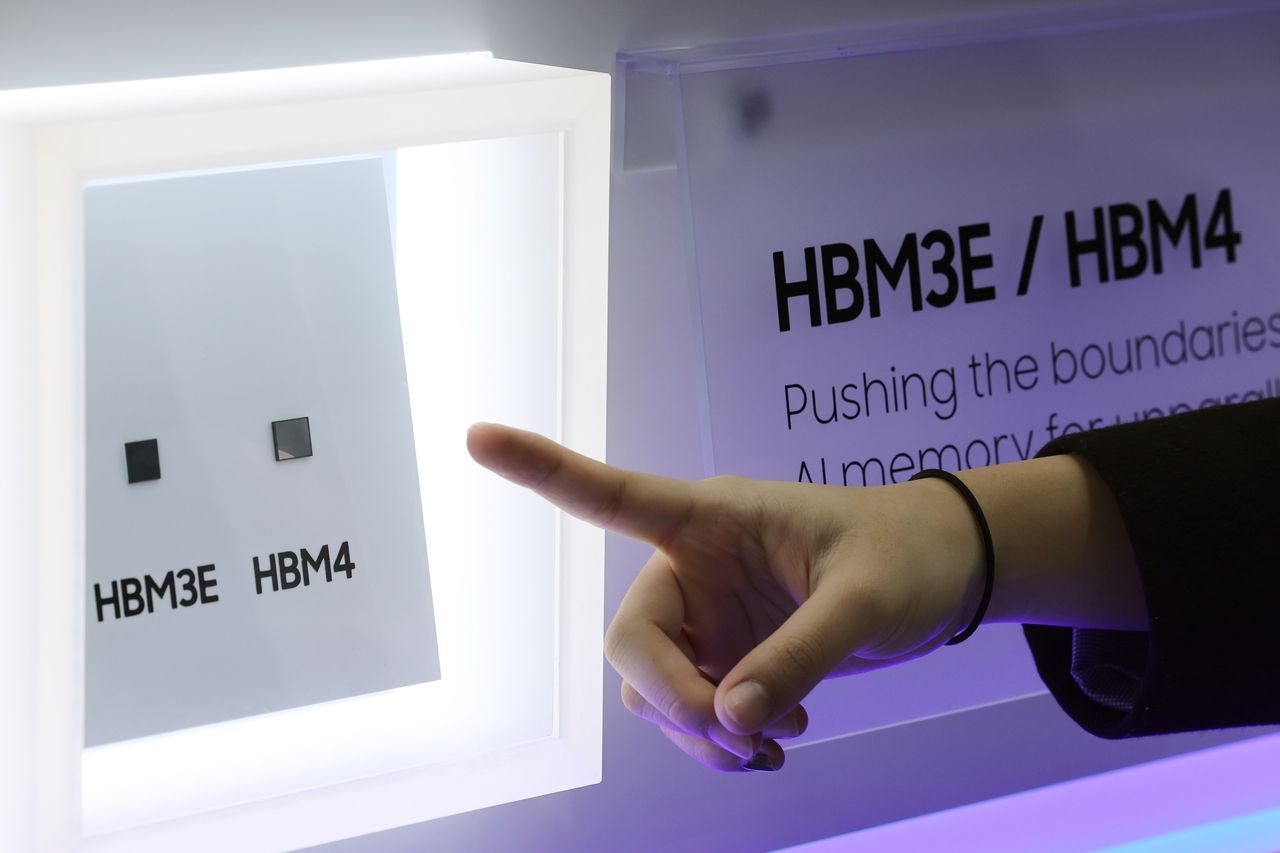
 Samsung Electronics has emerged as a strong contender in Nvidia’s next-generation AI memory supply race after its sixth-generation high bandwidth memory, known as HBM4, received favorable late-stage test feedback focused on speed and power efficiency, according to local semiconductor industry sources.
Nvidia engineers reportedly reviewed Samsung’s progress on HBM4 system-in-package, or SiP, testing, a critical step that evaluates whether multiple chips can operate stably when integrated into a single advanced package. In those discussions, Samsung was informed that its HBM4 delivered the strongest overall results among competing memory suppliers in key performance metrics, the sources said.
Samsung Electronics has declined to comment, saying it could not confirm matters related to customer testing.
The development does not amount to a final qualification or a confirmed supply contract. However, industry officials believe it signifies a narrowed gap between Samsung and long-time market leader SK hynix as Nvidia prepares its next-generation AI platform based on the Rubin architecture.
Rubin, named after astronomer Vera Rubin, is Nvidia’s upcoming GPU microarchitecture scheduled for commercial release in the third quarter of 2026, according to Nvidia. The platform will use HBM4 memory and is expected to underpin future AI data center systems.
Industry sources said Nvidia’s preliminary discussions with Samsung regarding next year’s HBM4 supply volumes were larger than Samsung’s internal expectations. While volume allocation has not been finalized and remains subject to Nvidia’s internal validation process, the demand signals have raised expectations that Samsung could play a more substantial role in Nvidia’s HBM4 supply chain than it did during the HBM3E cycle.
HBM4 represents a step change from earlier generations. Unlike conventional memory products, HBM4 is designed to function almost as an extension of the GPU itself, relying on close coordination between memory stacks, logic chips and advanced packaging. SiP testing is regarded in the semiconductor industry as one of the final technical checkpoints before mass production, as it examines conditions close to real-world use.
 Competition remains intense.
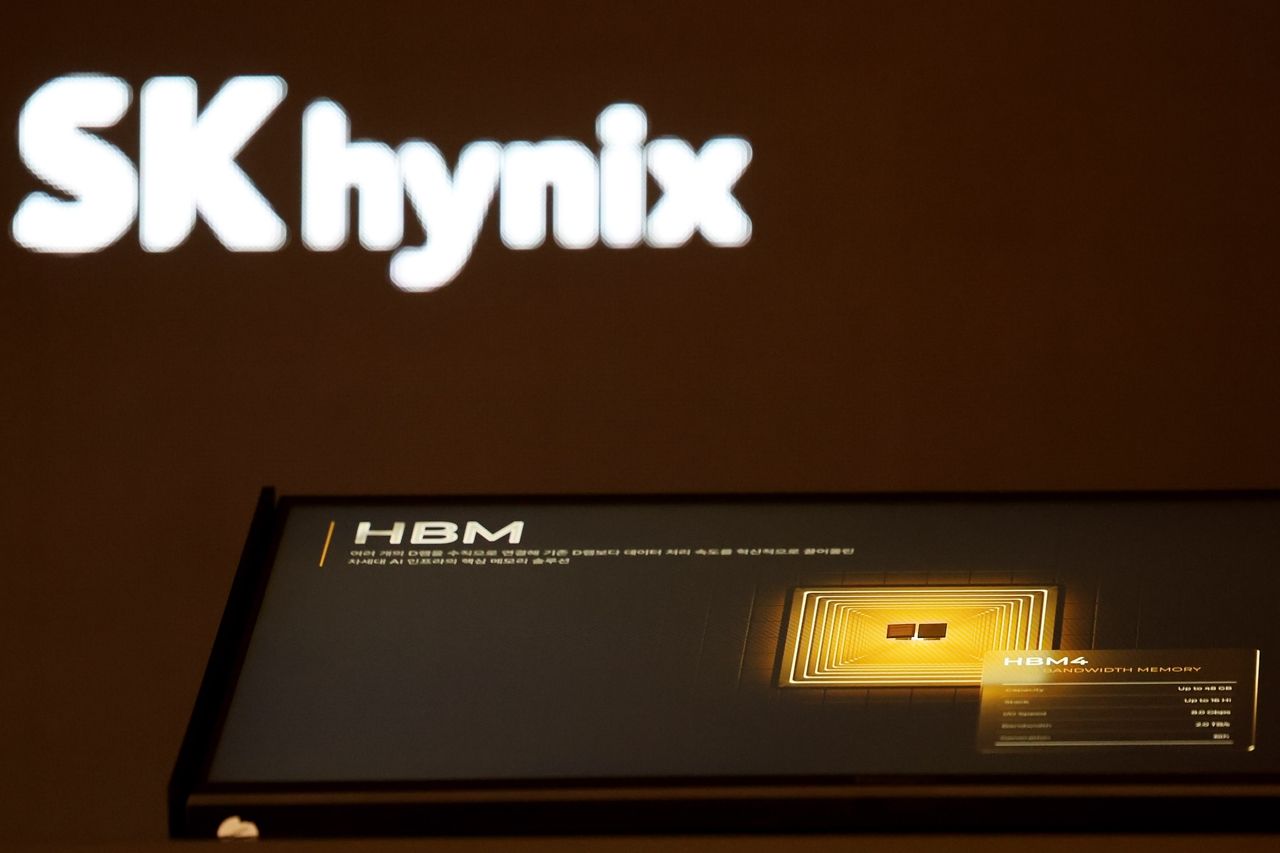
SK hynix completed preparations for HBM4 mass production in September and has been supplying paid samples to Nvidia for months, a stage that typically indicates a product is nearing commercial readiness. SK hynix is still regarded as Nvidia’s primary HBM supplier going into the Rubin era, although the performance gap between the two Korean chipmakers has narrowed faster than in previous generations.
Samsung’s improving position comes amid a broader recovery in its HBM business. According to Counterpoint Research on Thursday, Samsung accounted for 22 percent of global HBM revenue in the third quarter, ranking second behind SK hynix at 57 percent and ahead of Micron at 21 percent. Samsung had trailed Micron earlier in the year before regaining second place.
Samsung is expected to continue expanding HBM production capacity at its Pyeongtaek campus, with industry officials anticipating that any formal supply agreement would be concluded in early 2026, followed by volume deliveries later in the year.
Chair Lee Jae-yong reportedly visited key semiconductor R&D sites on Monday, including the Giheung campus in Gyeonggi Province, to review technology progress and next year’s business strategy.
- Long-delayed destroyer project shifts to competitive bidding
- Korea cuts E-9 visa quota to 80,000 for 2026
- ARKO Selection begins 18th year, continues its role as platform for new works
- Jennie unveils hangul veil at MMA 2025, spotlighting Korean aesthetics through Le Je
- Closing out K-pop 2025: Stray Kids dominate, girl groups soar








Most Commented