
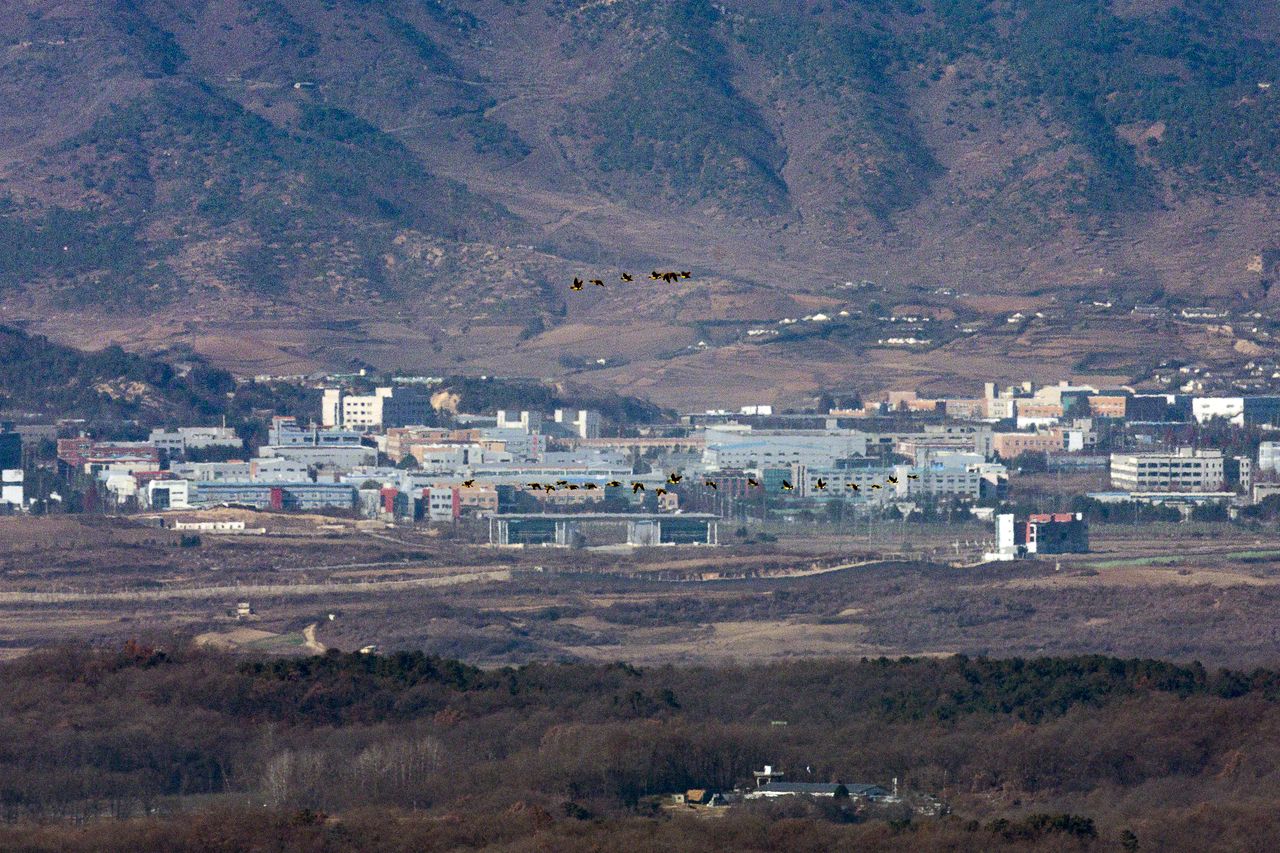
 The United Nations Command on Wednesday objected to a bill seeking to grant the South Korean government control of non-military access to the Demilitarized Zone, underscoring its role as the “administrator” of the military buffer zone between the two Koreas.
The rare lengthy statement by the UNC came amid a debate over a bill proposed by ruling party lawmakers earlier this year that calls for granting the government the authority to regulate non-military access to the DMZ, as part of efforts to promote the peaceful use of the military buffer zone.
“Since 1953, UNC has been the successful administrator of the Demilitarized Zone, a role that has been essential in maintaining stability, especially amid periods of heightened inter-Korean tensions,” it said.
The US-led multinational force specifically cited Article 1 of the armistice agreement that stated the responsibility of the UNC chief, doubled by the commander of the US Forces Korea, and the jurisdiction that grants control of access to the UNC Military Armistice Commission.
“Civil administration and relief in that part of the Demilitarized Zone which is south of the Military Demarcation line shall be the responsibility of the Commander-in-Chief, United Nations Command,” the UNC mentioned in the statement.
“No person, military or civilian, shall be permitted to enter the demilitarized zone except persons concerned with the conduct of civil administration and relief and persons specifically authorized to enter by the Military Armistice Commission,” it also cited.
Still, the UNC acknowledged that the South Korean military plays a key role in carrying out “critical tasks” needed for the administration of the DMZ and reaffirmed its commitment to “maintaining the Armistice and stability on the Korean Peninsula with the optimistic hope that a permanent peace treaty can be achieved.”
The issue over DMZ access control resurfaced after Unification Minister Chung Dong-young recently stressed the need for the DMZ access bill, saying that a senior presidential security official and Cardinal Lazzaro You Heung-sik were denied access to the buffer zone.
While the unification ministry has backed the legislation on the grounds that the issue pertains to “territorial sovereignty,” it has also faced objections from both the foreign and defense ministries, as well as the UNC, which maintains that the armistice agreement remains the “binding framework” for such access.
The UNC reportedly also expressed concerns over the idea during a recent meeting between its official and the chief of the Ministry of Government Legislation. (Yonhap)








Most Commented