
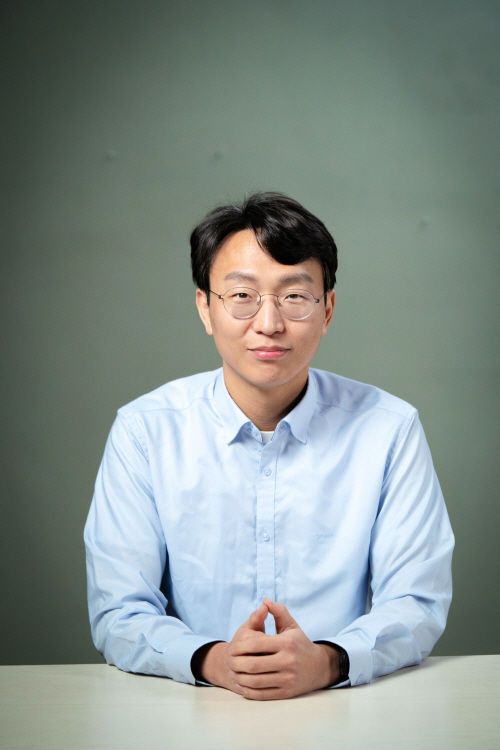
 Dr. Jung Hee-won, a prominent figure in Korea’s healthy lifestyle movement, is facing allegations from a former employee that he abused his position to exploit her labor and subjected her to sexual harassment.
The dispute has escalated into dueling police complaints, with Jung accusing the woman of stalking and extortion, and the former employee accusing him of sexual harassment.
The backlash has already cost Jung his advisory role in Seoul’s health policy, while food manufacturers have announced the termination of their partnerships with the doctor. Despite the fallout, disputes over the credibility of his rise as an influencer show no sign of fading.
At the center of the dispute is who created the content behind Jung’s nationwide hit “slow aging” brand and whether the physician-turned-influencer exercised undue influence over a junior researcher during their collaboration.
The case has drawn outsized attention because Jung built his public reputation on trust, transparency and accessible health advice, attracting hundreds of thousands of young followers.
Who is Jung Hee-won?
Jung rose to public prominence while serving as a professor of geriatric medicine at Asan Medical Center in Seoul.
He first attracted attention on the social media platform X with unconventional dietary advice, including eating instant noodles with ice and lentils instead of soup, and advocating lentils and mixed-grain rice as alternatives to what he criticized as overly stimulating modern diets.
His consistent and often humorous messaging gradually built a loyal following, earning him the nickname “Professor Slow Aging,” after the concept he actively promoted.
An online community dedicated to the slow-aging diet grew to roughly 70,000 followers on X, while Jung’s YouTube channel amassed about 600,000 subscribers.
Many of his followers are in their twenties and thirties — a demographic often associated with Korea’s sweet-and-salty dessert trend — drawn to his use of memes and accessible language.
Retailers such as 7-Eleven Korea, CJ CheilJedang and Maeil Dairies later released ready-to-eat meals inspired by his dietary principles.
After leaving Asan Medical Center in June, Jung established a private institute to promote the slow-aging lifestyle and took on an advisory role in Seoul city’s health policy. He submitted his resignation from the city post on Sunday.
 What are the allegations?
A former member of Jung’s research team alleges that she authored many of the social media posts attributed to him and largely planned and executed the online campaigns promoting his health message. She also claims that columns and portions of a book published under Jung’s name as the sole author were written by her.
Her lawyer, Park Soo-jin of law firm Hyeseok, said the woman was a graduate student who worked under Jung until his departure from the hospital in June. Park further alleged that the researcher was subjected to sexual harassment, releasing screenshots purported to show sexually explicit conversations between Jung and the woman.
“During her employment, Jung repeatedly demanded taks that aligned with his sexual desires and preferences,” the lawyer said. “He undermined her ability to make independent decisions by invoking the possibility of his own suicide or her dismissal, even when she wanted to stop.”
The dispute escalated into legal action last week. Jung filed a police complaint accusing the former employee of stalking, claiming she threatened to expose private matters and demanded payments equivalent to his total income over the past two years, including clinical earnings. “I could not ignore it,” Jung said.
In response, the former employee filed a police complaint accusing Jung of sexual harassment.
Jung has dismissed all allegations as “entirely false.” His lawyer, Keith Park, argued that Jung could not have exercised a dominant position because his resignation from the hospital had already been finalized in early 2025.
Regarding profit-sharing from the book, Jung said in a statement released on his YouTube channel Friday that 30 percent of the royalties had been paid to the researcher.
 Credibility question
As the dispute continues, many of Jung’s followers have expressed disillusionment on social media. Some criticized the public’s tendency to elevate high-profile figures without sufficient scrutiny, while others said the case has deepened skepticism toward experts who convert professional credentials into online influence.
“I thought he had shown a multidimensional side that gave him the potential to appeal across the spectrum, including both conservative and progressive audiences,” said one social media commentator who followed Jung on X. “The facts should be clarified through legal proceedings, but it is hard to hide a sense of disappointment.”
- Long-delayed destroyer project shifts to competitive bidding
- Korea cuts E-9 visa quota to 80,000 for 2026
- ARKO Selection begins 18th year, continues its role as platform for new works
- Jennie unveils hangul veil at MMA 2025, spotlighting Korean aesthetics through Le Je
- Closing out K-pop 2025: Stray Kids dominate, girl groups soar







Most Commented