
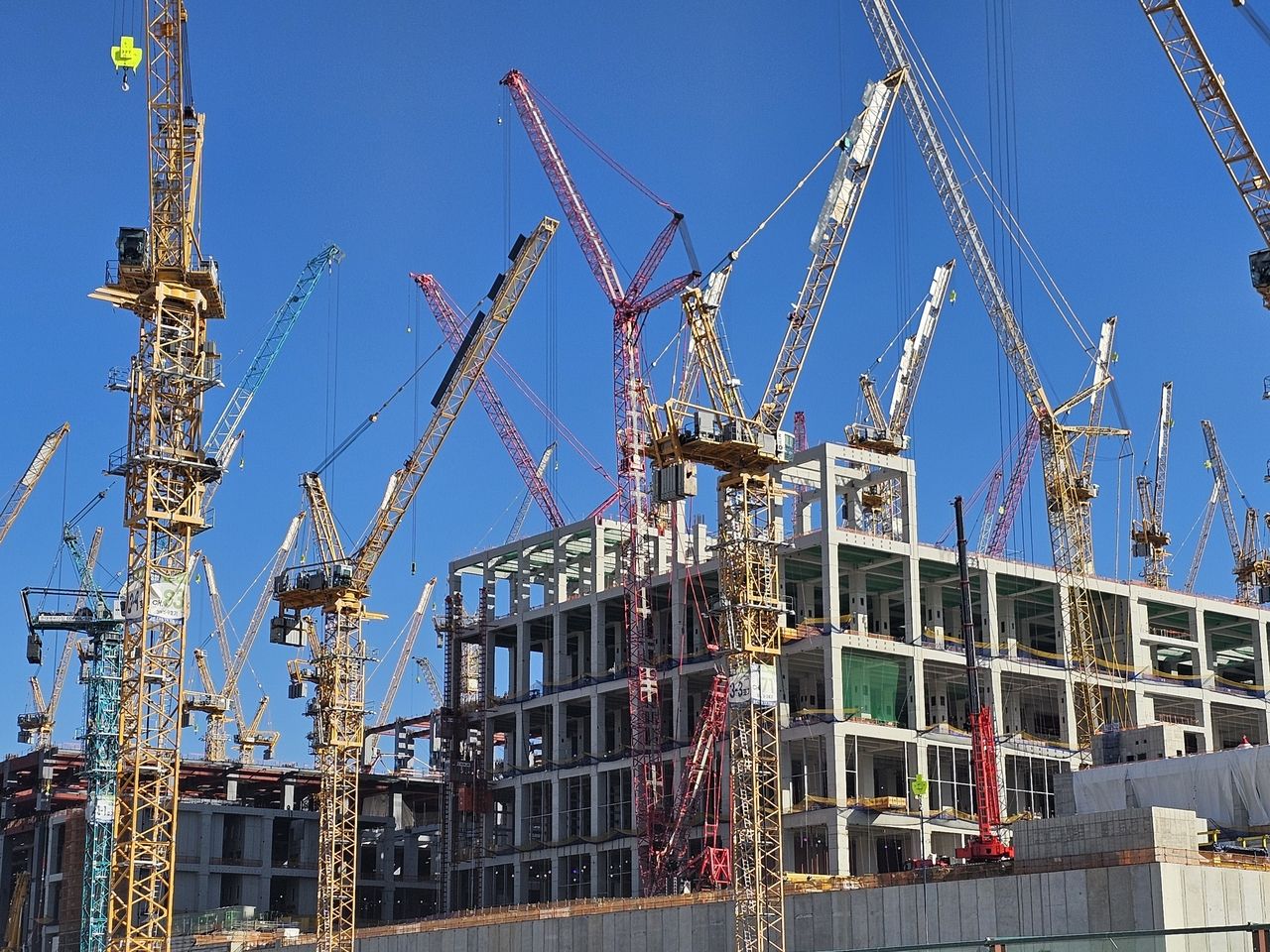
 Climate Minister King Sung-whan sparked outcry on both sides of the aisle this week with remarks suggesting doubt about South Korea’s 622 trillion won ($429.9 billion) ambition to build a semiconductor chip cluster in Yongin, Gyeonggi Province.
Despite calls for Kim to clarify his stance, the Ministry of Climate, Energy and Environment has yet to make a public statement on the matter as of Wednesday press time.
On Tuesday, Reps. Lee Eun-ju, Lee Sang-sik, Son Myoung-soo, and Boo Seung-chan of the ruling Democratic Party of Korea said in a joint statement that Kim’s remarks “triggered disarray and anxiety” not only about the prospects of the plan to construct 10 semiconductor manufacturing plants to be run by Samsung Electronics and SK hynix, but also about South Korea’s macroeconomic growth.
“Given the critical nature of the semiconductor industry, we are concerned that unnecessary and uneconomical controversies could cause confusion and delays in business procedures, with potentially devastating consequences for South Korea,” read the statement from the four lawmakers representing constituencies in the southern suburbs of Seoul.
They added that Kim should clarify his stance, labeling his remarks as “careless” amid the global chip arms race.
Conservatives also joined the ruling party lawmakers in decrying the comments.
Right-leaning Yongin mayor Lee Sang-il said Wednesday that such remarks are “destroying the country,” while the main opposition People Power Party said that Kim had made “irresponsible remarks that could create confusion about the nation’s semiconductor strategy.”
Demanding an explanation from Kim, Rep. Choi Bo-yun, senior spokesperson of the People Power Party, said, “There has been no explanation as to whether the remarks represent (Kim’s) personal opinion, the official government stance, or the direction of the presidential office. … A clear explanation of the context of the statement should be made.”
The controversy stemmed from Minister Kim’s remarks during a radio interview with CBS on Friday.
Kim claimed that a region with a greater supply of electricity could have been a more optimal location than Yongin for building a mega chip cluster.
“The total amount of electricity (Samsung Electronics and SK hynix) will consume will amount to what is generated by 15 nuclear power reactors, or 15 gigawatts in terms of power capacity,” Kim said.
He added that he had second thoughts about whether the two companies “should be located (in Yongin).”
“What I have in mind is whether (the companies) should start moving (their chip plants) to a region that has more electricity,” Kim said.
Later, the Climate Ministry on Monday said in a note to reporters that media reports about Kim’s remarks include “misunderstandings,” adding that Kim had intended to talk about his concerns while explaining the need to adopt self-sufficient microgrids to boost efficiency in power distribution.
Kim’s remarks, however, were interpreted by some ruling party lawmakers as an announcement that North Jeolla Province in the southwestern region could be an alternative to the Yongin site, considering its ample supply of renewable energy.
Among them were Reps. Yoon Joon-byeong and An Ho-young, representing constituencies in the North Jeolla region, who claimed that a new semiconductor cluster on a site like the reclaimed land in Saemangum would reflect the desire of the people in the region.
However, four lawmakers of the same party, led by Lee Eun-ju and representing constituencies covering the Yongin chip cluster, said the matter is becoming increasingly politicized ahead of the local elections in June.
The North Jeolla region, they added, is far from optimal because the chip plants avoid locations near the sea as the saltiness in coastal air could hamper the semiconductor plant’s operation, and because renewable energy cannot guarantee grid stability.
The mega plant project in Yongin began in the late 2010s as Samsung Electronics sought to build six semiconductor fabs and SK hynix was seeking four fabs within the cluster by 2047, backed by their 622 trillion won investment. The first fab of the 10, owned by SK hynix, will become operational in 2027.







Most Commented