
 A post by a former sex worker complaining that her government-funded “exit prostitution” subsidy had been reduced has sparked widespread backlash online, reigniting debate over the effectiveness and oversight of South Korea’s support system for people leaving the sex trade.
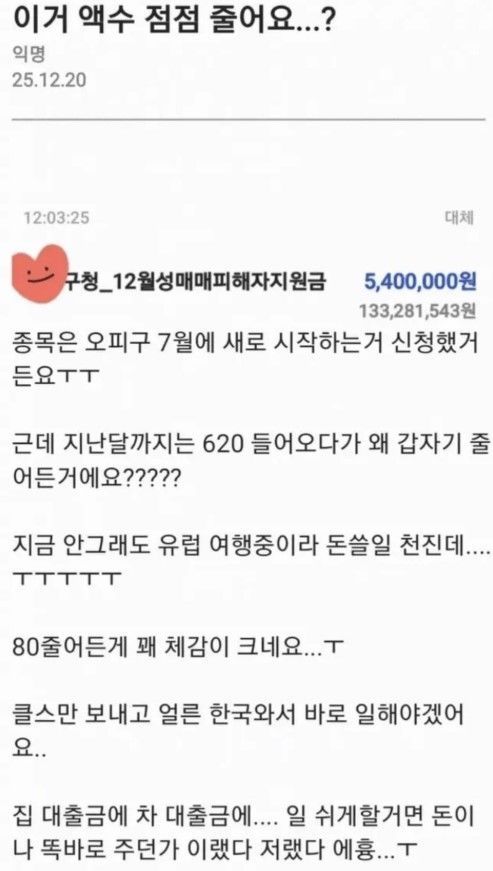
According to online community posts circulating Friday, the author of the original post said she began receiving the subsidy in July after leaving a sex work venue operating out of an officetel. She claimed she was paid 6.2 million won ($4,300) per month through November, but received 5.4 million won ($3,700) in December, prompting her to ask why the amount had been cut.
In the post, she said she was traveling in Europe and felt the reduction of 800,000 won was significant, given her expenses.
She added that she might return to sex work after spending Christmas abroad, writing that she still had a mortgage and a car loan and suggesting the support was insufficient if recipients were expected to stop working altogether.
 The “exit prostitution” subsidy program is designed to help victims of sex trafficking and exploitation stabilize their lives, recover, receive job training and reintegrate into society.
Support typically includes living expenses, housing assistance and vocational training provided over a fixed period.
The city of Paju, Gyeonggi Province, operates one of the country’s largest programs. Under local ordinances, individuals whose intent to leave prostitution is confirmed can receive support for up to three years, with total assistance capped at 71.8 million won per person, covering living, housing and job training costs.
However, the viral post has renewed criticism over how beneficiaries are assessed and monitored.
Critics have questioned how authorities determine whether recipients have genuinely exited prostitution and how funds are tracked after disbursement. Concerns have also been raised about the lack of clear standards for post-support oversight and accountability.
Online reaction was swift and largely negative. Many commenters questioned whether sex workers should be classified as victims.
Others criticized the scale of the payments, noting that the monthly support exceeds the income of many full-time workers. “I didn’t know there was such support. The payments are the same as a six figure salary,” one commenter wrote. “Is it dumb to be diligent? I work so hard and earn 2 million won a month,” another wrote.
Some also took issue with the claim that the subsidy was used for overseas travel.








Most Commented