
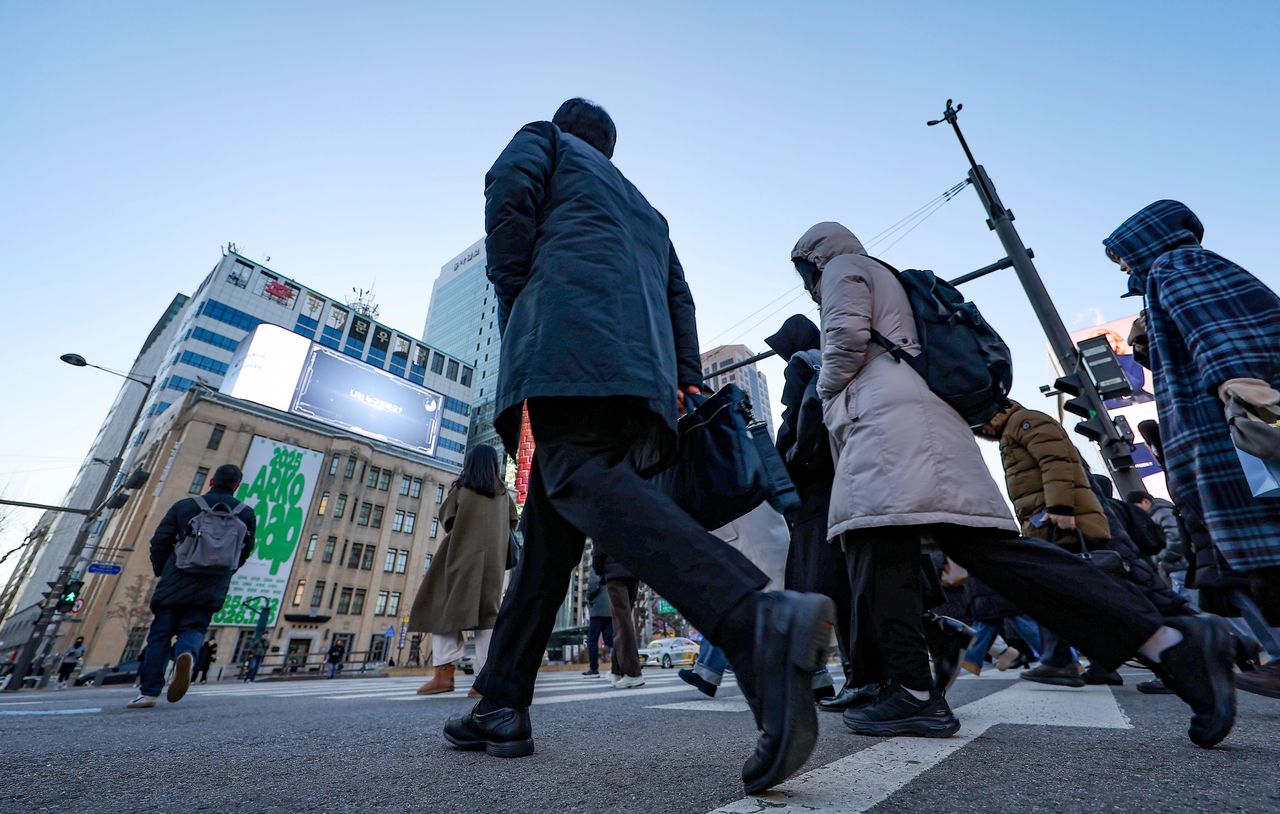
 South Korea’s Culture Ministry on Wednesday released a report outlining six major trends expected to shape daily life in the country in 2016, signaling a shift from post-political-crisis recovery to a period of social “adaptation.”
The trends include a move toward a more human-centered approach in the post-AI era, a growing emphasis on individual identity and hyper-personalization, and a broader transition toward wellness. The report also cited an ethic of practical consumption, rising pride in K-culture and new forms of coexistence grounded in emotional empathy.
The findings are detailed in the ministry’s report, “2026 Social and Cultural Trends,” which analyzed about 538 million pieces of online data collected between January and November, including news articles, social media posts, online communities and video platforms. Researchers extracted more than 74,700 key terms from the dataset to track shifts in public sentiment and everyday life.
Push for human-centered turn
As generative artificial intelligence becomes deeply embedded in everyday life, public debate is increasingly focused not simply on how to use the technology, but on how to redefine human roles and responsibilities alongside it.
During the survey period, online mentions of AI rose 44 percent from a year earlier. Related terms such as policy (up 147.5 percent), security (up 220.4 percent) and regulation (up 109.1 percent) surged, reflecting growing interest in institutional oversight.
The findings suggest that while the public has embraced the convenience and promise of artificial intelligence, concerns about its impact on jobs, safety and fairness are also intensifying. It is no longer viewed solely as a matter of technological advancement, but as a subject of public debate about how society should govern technology while preserving human-centered values.
‘Being myself’
The analysis also points to an accelerating move toward a more individualistic society, as people increasingly seek to chart their own paths rather than conform to social norms. Interest in “being true to oneself” has grown, with online mentions of the term “being myself” rising 10 percent from the previous year.
Associated keywords included “individuality,” “identity,” “choice” and “self-determination,” reflecting a growing tendency to define life decisions around personal values rather than societal expectations. Across many areas of life, people are placing greater emphasis on what feels right for them personally, a shift that suggests society is moving away from a single standard model toward the coexistence of diverse ways of living.
Wellness
Public perceptions of health are also changing. Mentions of “wellness” rose 16 percent from 2024, alongside sharp increases in related terms such as “daily life,” “old age,” “later years” and “slow aging.”
Rather than focusing solely on medical treatment, people are showing growing interest in lifelong health management that includes sleep, daily habits, mental well-being and preparation for aging. Health is increasingly viewed not just as a personal choice, but as a basic social condition necessary for a stable life.
Cost-effectiveness in consumption
Consumer attitudes are also evolving. More people are prioritizing balance and efficiency, making practicality a routine part of everyday spending decisions. Mentions of consumption rose 13 percent year over year, with “cost-effectiveness” emerging as the most prominent related term. The trend reflects not so much a desire to spend less, but an effort to manage expenses through rational choices and alternative forms of consumption.
Pride in K-Culture and rise of ‘feelconomy’
Alongside an emphasis on cost-effectiveness, cultural life is increasingly shaped by emotional engagement and pride as K-culture expands beyond content consumption into a domain intertwined with economic value. This shift reflects the growing role of consumers’ emotions and emotional resonance in shaping purchasing decisions — a phenomenon often described as the “feelconomy.”
The study found that emotional resonance built online is increasingly being converted into tangible economic effects. Fan-driven, participatory cultural consumption has translated into real-world spending on exhibitions, performances, tourism and merchandise.
Online mentions of “K-culture” increased 31 percent from a year earlier, with notable growth in terms related to fandom and collective pride. Notably, “KPop Demon Hunters” and “hanbok” ranked first and second among related search terms.
Coexistence rooted in emotional empathy
Finally, the analysis points to changing ideas about how people coexist. Mentions related to relationships and empathy rose 20 percent, with emotionally charged terms such as “recovery,” “emotion” and “communication” standing out.
Rather than relying on large organizations or formal institutions, people are increasingly finding emotional support and stability in small communities built around shared interests, lifestyles or preferences. The shift reflects a growing emphasis on relationship structures that enable recovery during times of crisis, rather than on narrow definitions of success based on outward achievement.






Most Commented